How to Choose an Accent Chair: A Style, Size & Placement Guide
How to choose an accent chair
A style, size, and placement guide — the four decisions that separate a chair that gets used from one that just sits there looking nice.
 Ennovanest
An accent chair is the easiest piece of furniture to get wrong. It's small enough to feel like a low-stakes purchase — so it gets picked on looks alone, in five minutes, from a thumbnail. Then it arrives, and it's either too big for the corner, too formal for the rest of the room, or too uncomfortable to actually sit in.
None of that is really about taste. It's about skipping four decisions that take less time than the chair itself takes to arrive: what job it's doing, whether it fits the space, what it's covered in, and where it actually goes.
Decide the job before the look
Every accent chair is doing one of three jobs: a quiet reading spot, extra seating for when people are over, or a pure statement piece nobody actually sits in for long. Picking the job first narrows everything else — comfort matters more for a reading chair, footprint matters more for extra seating, and shape can get bolder on a statement piece since it's judged on presence, not hours spent in it.


Scale it to the room, not the photo
A chair that looks perfectly sized on a product page can swallow a small corner or vanish in a large one — because there's nothing in the photo to compare it to. Before buying, measure the actual footprint (width and depth, arms included) and check it against the spot you have in mind.
Leave real walking room around it. A chair jammed against a doorway or a walkway gets avoided, no matter how good it looks.
Pick the material for how it'll be used
Looks aside, upholstery is a durability decision. Boucle and velvet feel plush but show wear faster in high-traffic spots; a wood frame with a simpler fabric holds up longer where the chair gets used daily rather than admired occasionally.


Where it actually goes
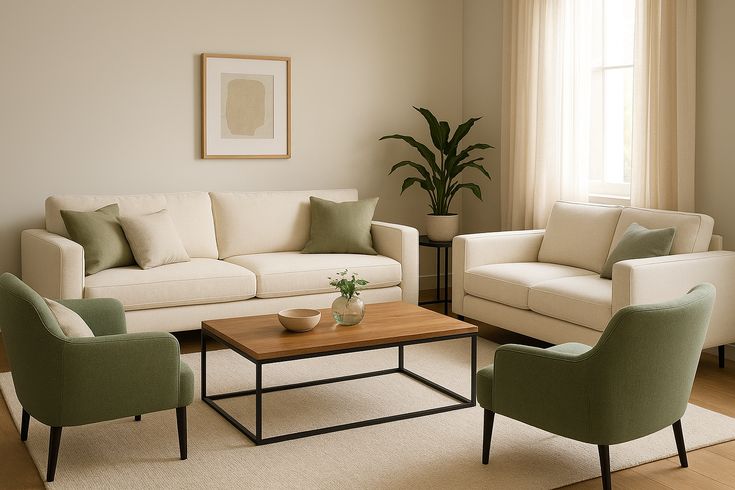
A single accent chair works best defining a corner, a reading nook, or one side of a conversation area — angled slightly toward the room rather than flush against a wall. Two chairs, placed as a pair facing the sofa, read as an intentional seating group rather than overflow seating.
One habit that quietly undercuts the whole effect: matching the chair's fabric to the sofa's. Treat it as a sibling to the room's furniture, not a twin — a shade lighter or darker, or a contrasting texture, is what makes it register as an accent instead of a spare cushion.
The four-minute checklist
- You know which job it's doing — reading, extra seating, or statement piece
- You've measured the actual spot, not just eyeballed the photo
- There's real clearance to walk past it
- The material matches how often it'll actually get used
- It complements your other furniture — not an exact match to it
One from every price point
If nothing above narrowed it down yet, these three cover the range — an everyday budget pick, a mid-century classic, and a statement chair built to be the room's focal point.


See the full range
22 accent chairs across every style and price point — filter by the one that matches the job you need it to do.
Shop all accent chairs